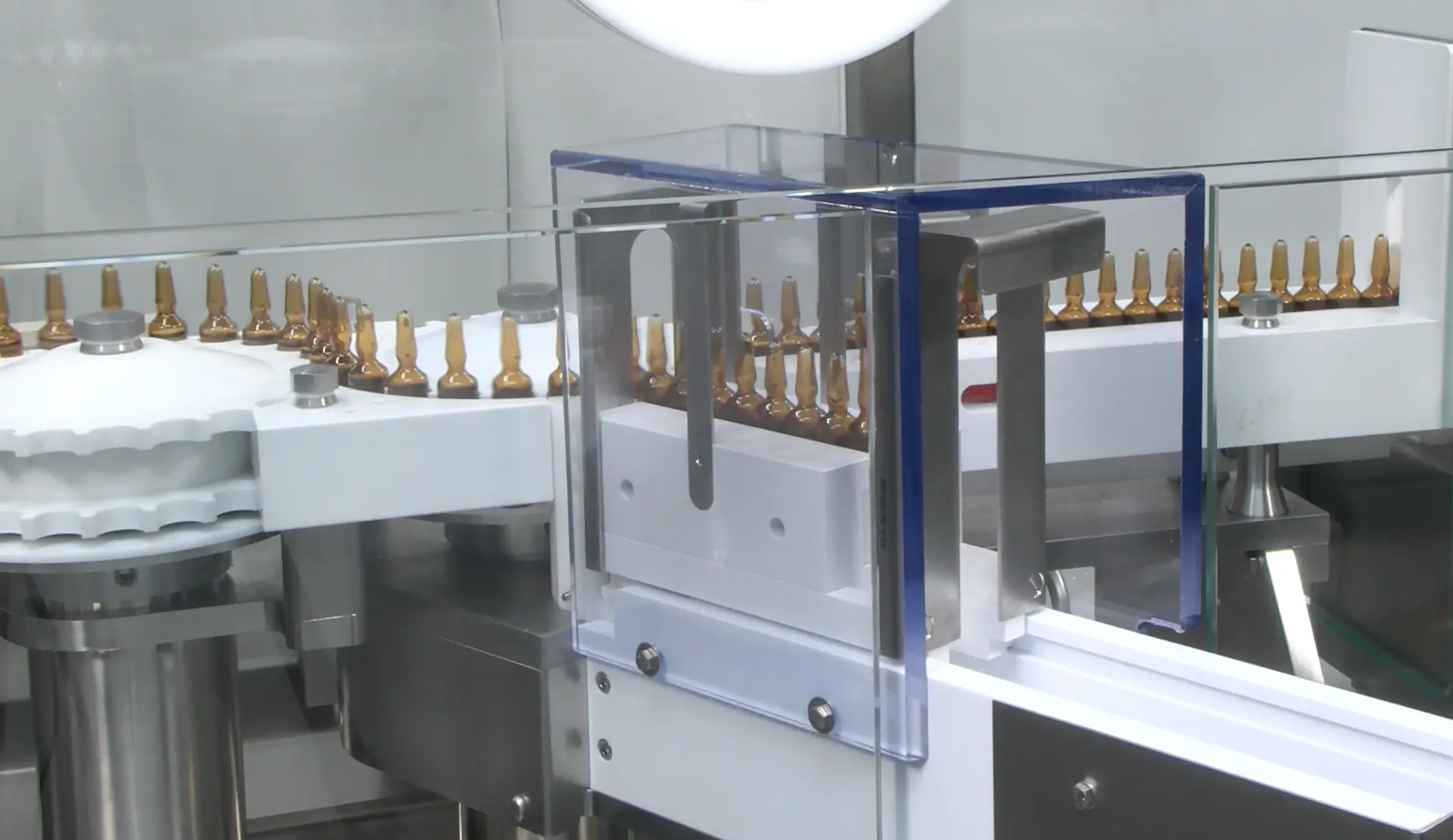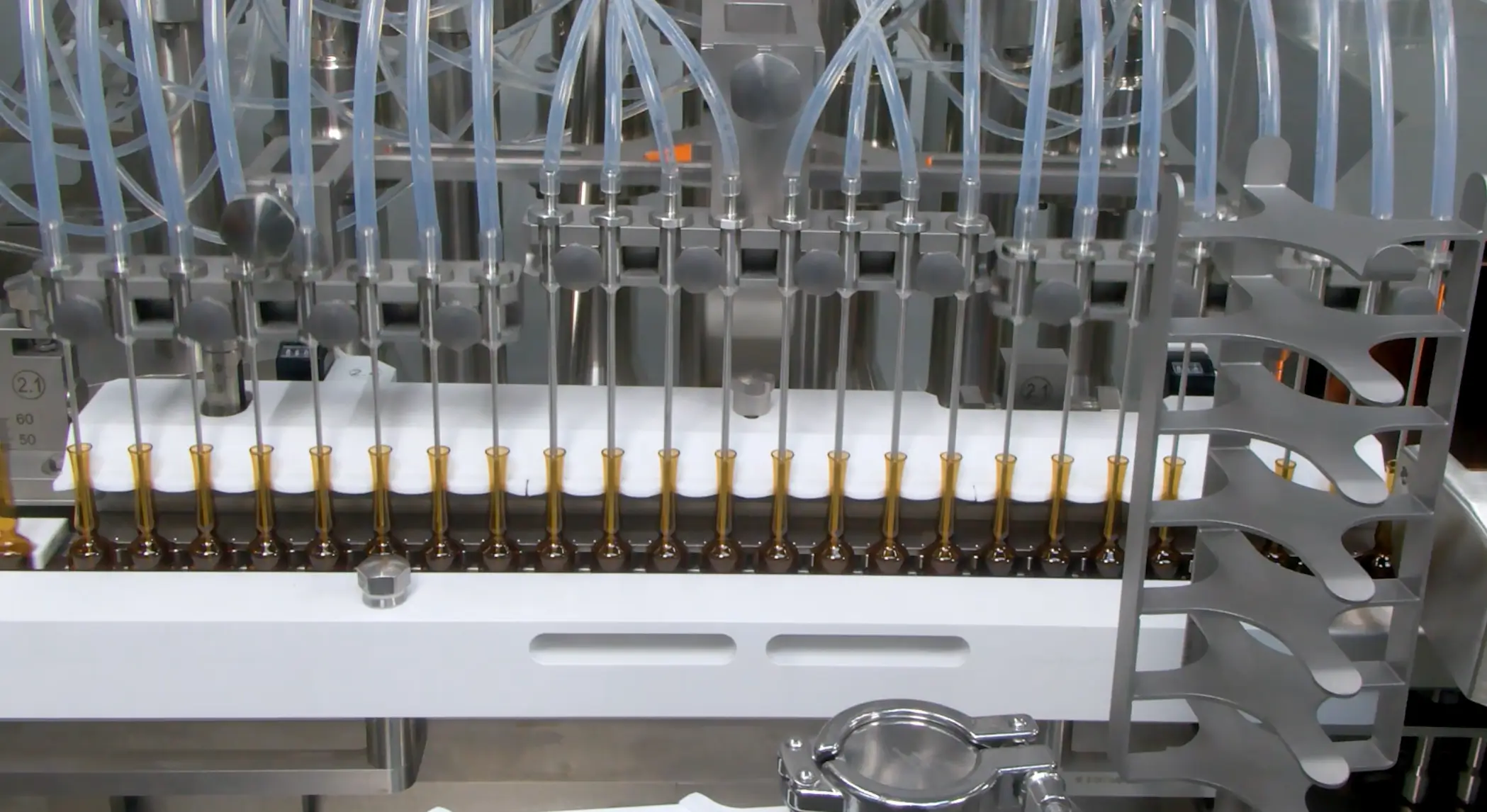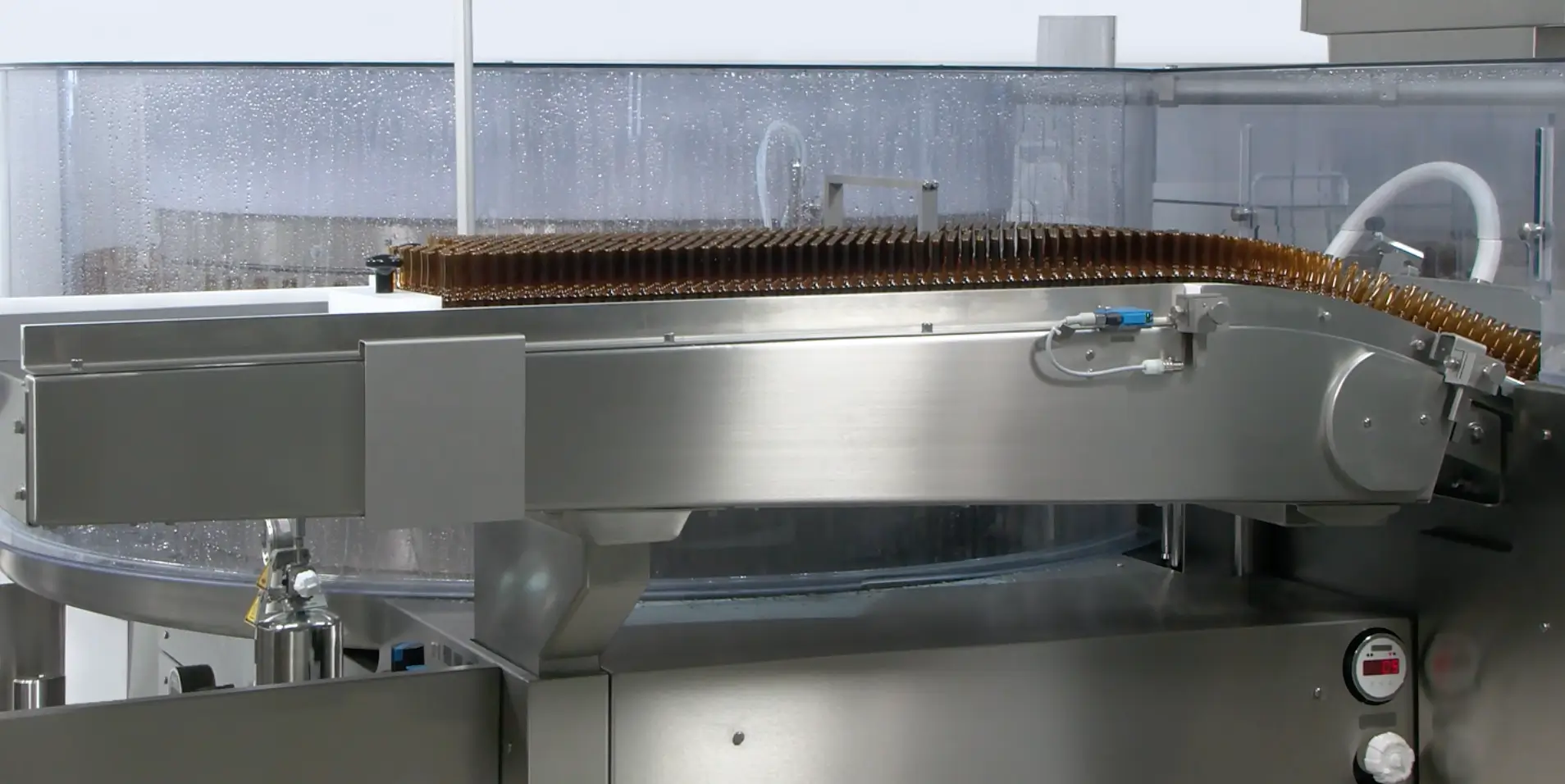



Container closure integrity, or CCI, refers to the tightness of a pharmaceutical container throughout its shelf life. A vial, an ampoule or a syringe must prevent microorganisms, gases or liquids from entering and product from escaping. Testing this integrity has been regulated in detail since the revision of Annex 1 and is part of every fill finish process. This article explains the methods, their limits and the regulatory requirements.
Key takeaways
- Containers closed by fusion, such as ampoules, must be integrity tested at 100 percent.
- Deterministic methods such as vacuum decay or high-voltage leak detection deliver measurable results and are preferred over dye ingress tests.
- Integrity must be planned and validated as early as the selection of vial, stopper and crimp cap.
What does container closure integrity mean?
The container is the last barrier between product and environment. A hairline crack in the glass, a poorly seated stopper or a weakly crimped cap can let microorganisms in without being visible. Leak detection demonstrates that the closed container maintains this barrier throughout its shelf life. The United States Pharmacopeia describes the methods in chapter USP 1207, and Annex 1 of the EU GMP guide defines when and how often testing is carried out.
Which test methods exist?
| Method | Principle | Type | Use |
|---|---|---|---|
| Vacuum decay | Container in test chamber, pressure rise indicates leak | deterministic | Vials, syringes, bags |
| High-voltage leak detection | Current flows through conductive liquid if a crack is present | deterministic | Ampoules, vials with conductive content, 100 percent inline testing |
| Laser-based headspace analysis | Measurement of oxygen or pressure in the headspace | deterministic | Vials with inert gas or vacuum |
| Mass extraction | Gas flow out of the container under vacuum | deterministic | Vials, syringes |
| Dye ingress | Container in dye solution under vacuum, dye inside indicates leak | probabilistic | Development, sampling |
| Microbial ingress | Container in microbial suspension, growth indicates leak | probabilistic | Validation of packaging materials |

What does Annex 1 require?
Annex 1 distinguishes by closure type. Containers closed by fusion, meaning glass ampoules and blow-fill-seal containers, must be integrity tested at 100 percent. For other containers such as vials with stopper and crimp cap, sampling with a validated method is permitted, with the sample size justified on a risk basis. In addition, the closure process itself must be validated, for example crimping force and residual oxygen in the headspace. Containers closed under vacuum must be re-tested after a defined storage period.
Why deterministic methods are preferred
A dye ingress test only delivers yes or no and depends on factors such as test duration, vacuum and observer. Deterministic methods, on the other hand, measure a physical value that can be calibrated with a defined leak. They detect smaller leaks, are reproducible and can be documented. Authorities therefore increasingly expect deterministic methods for routine testing, while probabilistic tests remain for development.
Integrity starts with packaging selection
- Vial and stopper must match dimensionally, and the manufacturer supplies data for this
- Crimping force is validated and monitored in the process
- Stopper material and product must be compatible, otherwise the stopper may swell or shrink
- Transport and storage in cold or low pressure change integrity and belong in the validation
Leak testing at Lubeca fill
Lubeca fill was founded in 2019 and fills ampoules from 1 to 10 ml, vials and bottles on equipment from Groninger, Bausch + Ströbel and Syntegon in Çorlu near Istanbul. Leak testing is part of the in-process controls and is defined product-specifically during validation. EU GMP certification is currently in preparation. The entire process is shown in the article on fill finish, and the regulatory requirements in the article on Annex 1. Details of ampoule filling can be found on the page ampoule filling.
Frequently asked questions about container closure integrity
How small are the leaks in question?
Leaks from about 0.2 µm are considered critical, because bacteria can enter from this size. Modern deterministic methods detect leaks of this order of magnitude.
Does the sterility test replace the leak test?
No. The sterility test evaluates a sample at the time of release. The leak test ensures that the container also remains tight over the storage period.
Does every vial have to be tested?
For ampoules, yes. For vials with stoppers, a validated sample is sufficient provided the closure process is validated.
Would you like to know how Lubeca fill tests the integrity of your containers? Contact us.