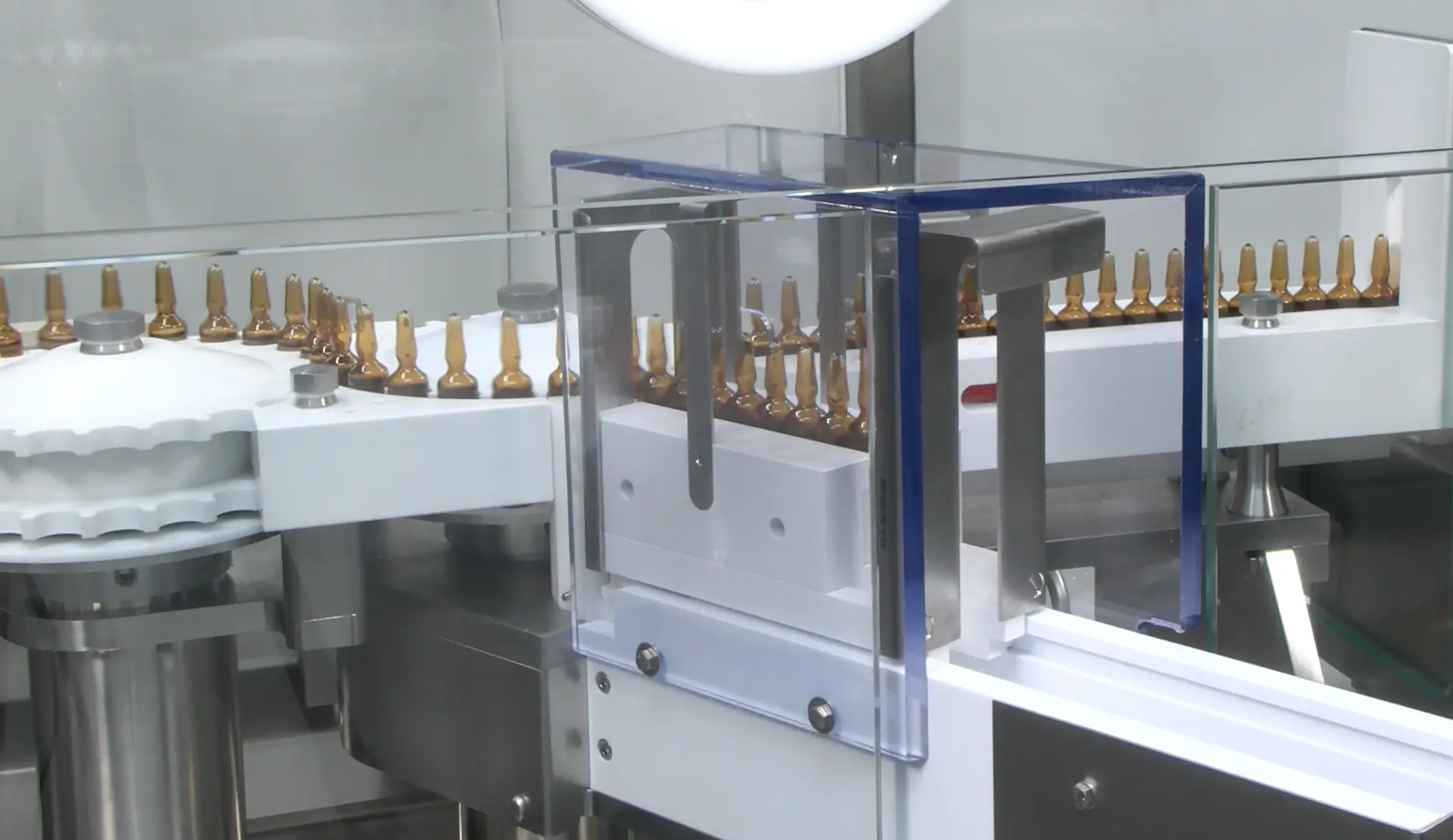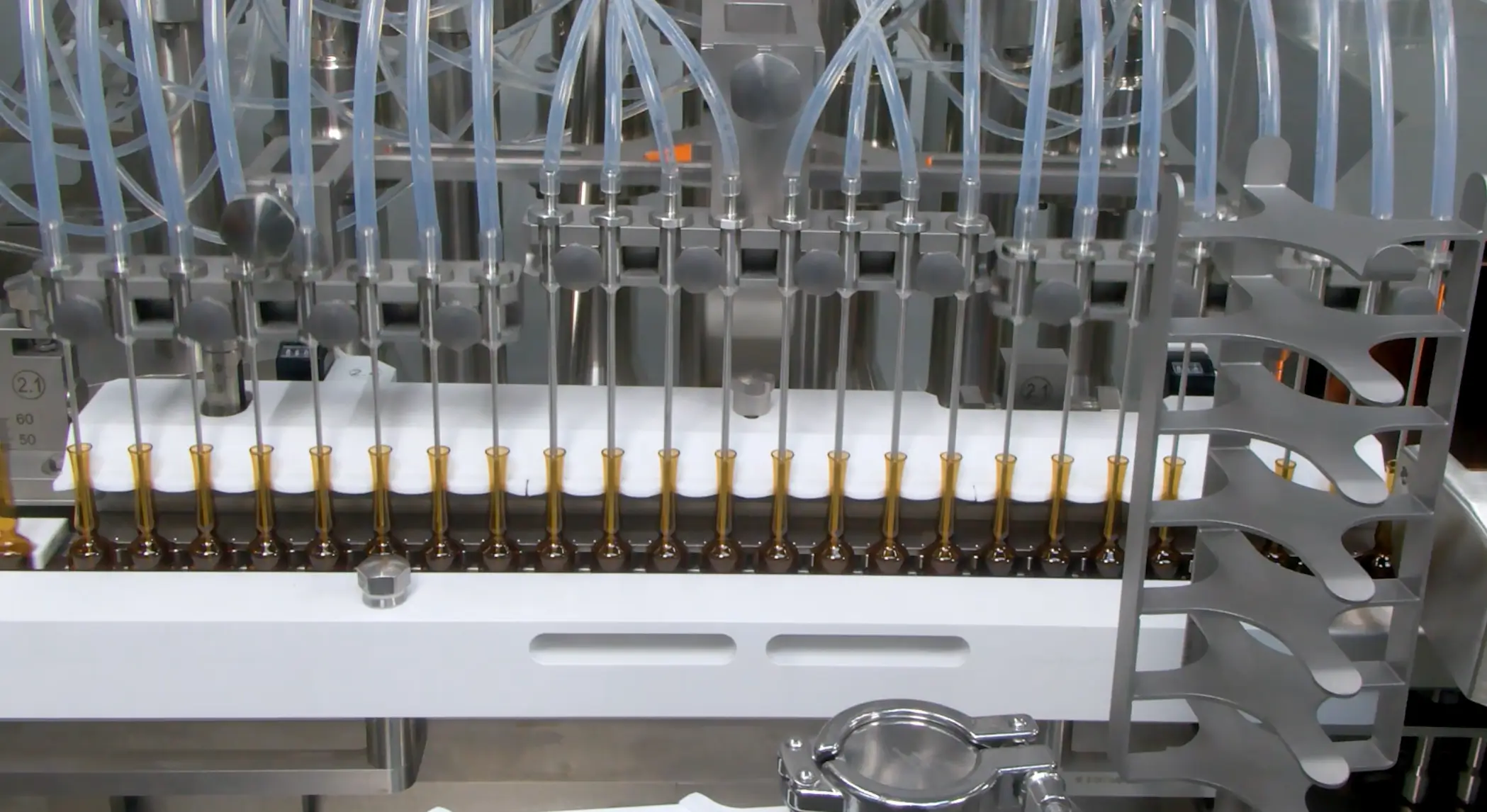



Sterile filtration is the process by which liquid medicines are freed of microorganisms by passing them through a membrane filter with a pore size of 0.2 µm. It is the standard for products that cannot be sterilised by heat and takes place in aseptic filling directly before the filling step. Because no further sterilisation follows the filtration, the safety of the product depends on the integrity of the filter. This article explains the process, the tests and the limits.
Key takeaways
- Sterile filters retain bacteria, and the filtration is validated with the test organism Brevundimonas diminuta.
- Every filter is integrity tested before and after use, and Annex 1 requires the pre-use test after sterilisation.
- Viruses, endotoxins and particles below 0.2 µm are not removed by sterile filtration.
What is sterile filtration?
In sterile filtration the product solution is pressed under pressure through a membrane whose pores are so small that bacteria are retained. Membranes made of PES, PVDF or nylon with a nominal pore size of 0.2 or 0.22 µm are common. The filtrate passes into a sterile vessel or directly to the filling line. The method is gentle because it works without heat and is therefore suitable for proteins, vitamins and many active ingredients that would degrade during autoclaving.
When is sterile filtration used and when terminal sterilisation?
| Criterion | Sterile filtration with aseptic filling | Terminal sterilisation in the container |
|---|---|---|
| Suitable for | heat-sensitive products, proteins, not suspensions | heat-stable solutions, for example many infusions |
| Sterility assurance | dependent on filter, cleanroom and personnel | very high, sterility assurance level can be validated |
| Regulatory requirement | only permitted if terminal sterilisation is not possible | preferred method |
| Evidence | filter validation, media fill, environmental monitoring | sterilisation validation with biological indicators |
How is a sterile filter validated?
Filter validation demonstrates that the filter works with the specific product. The core element is the bacterial retention test, in which the product solution is challenged with at least 10 million organisms of the test strain Brevundimonas diminuta per square centimetre of filter area. The filtrate must be sterile. In addition, tests are carried out on the compatibility of filter and product, on adsorption of the active ingredient to the membrane and on extractables that could migrate from the filter into the product.
Which integrity tests exist?
- Bubble point test: determines the pressure at which air breaks through the wetted membrane
- Diffusion test: measures the gas flow through the wetted membrane at a defined pressure
- Pressure hold test: checks whether the pressure remains stable over a defined time
Since 2023, Annex 1 has required the integrity test of the sterilised filter before use, known as PUPSIT, as well as a test after filtration. Only if both tests are passed is the batch considered sterile filtered.
Where are the limits of sterile filtration?
A 0.2 µm filter retains bacteria and fungi, but not viruses, mycoplasma or endotoxins. These require separate steps such as virus filtration or control of the starting materials. Suspensions, emulsions and viscous products often cannot be filtered because the particles clog the membrane or would themselves be retained. Proteins can also adsorb to the membrane and lose active ingredient.
Sterile filtration at Lubeca fill
Lubeca fill was founded in 2019 and fills sterile liquids into ampoules, vials and bottles in Çorlu near Istanbul. Sterile filtration is part of the fill finish process and is validated for each product. The equipment comes from Groninger, Bausch + Ströbel and Syntegon, and EU GMP certification is currently in preparation. The entire process is described in the article on fill finish, and the regulatory requirements in the article on Annex 1.
Frequently asked questions about sterile filtration
Why 0.2 µm and not smaller?
0.2 µm is the established pore size at which the test organism Brevundimonas diminuta is reliably retained. Smaller pores increase the pressure drop and offer no advantage against bacteria.
What is redundant filtration?
Two sterile filters in series. If the integrity test of the first filter fails, the second one safeguards the batch.
Does the filter have to be revalidated for each product?
Yes. Retention, compatibility and adsorption depend on the product solution. Validation is part of the tech transfer.
Do you have a product that needs to be sterile filtered and aseptically filled? Contact us.