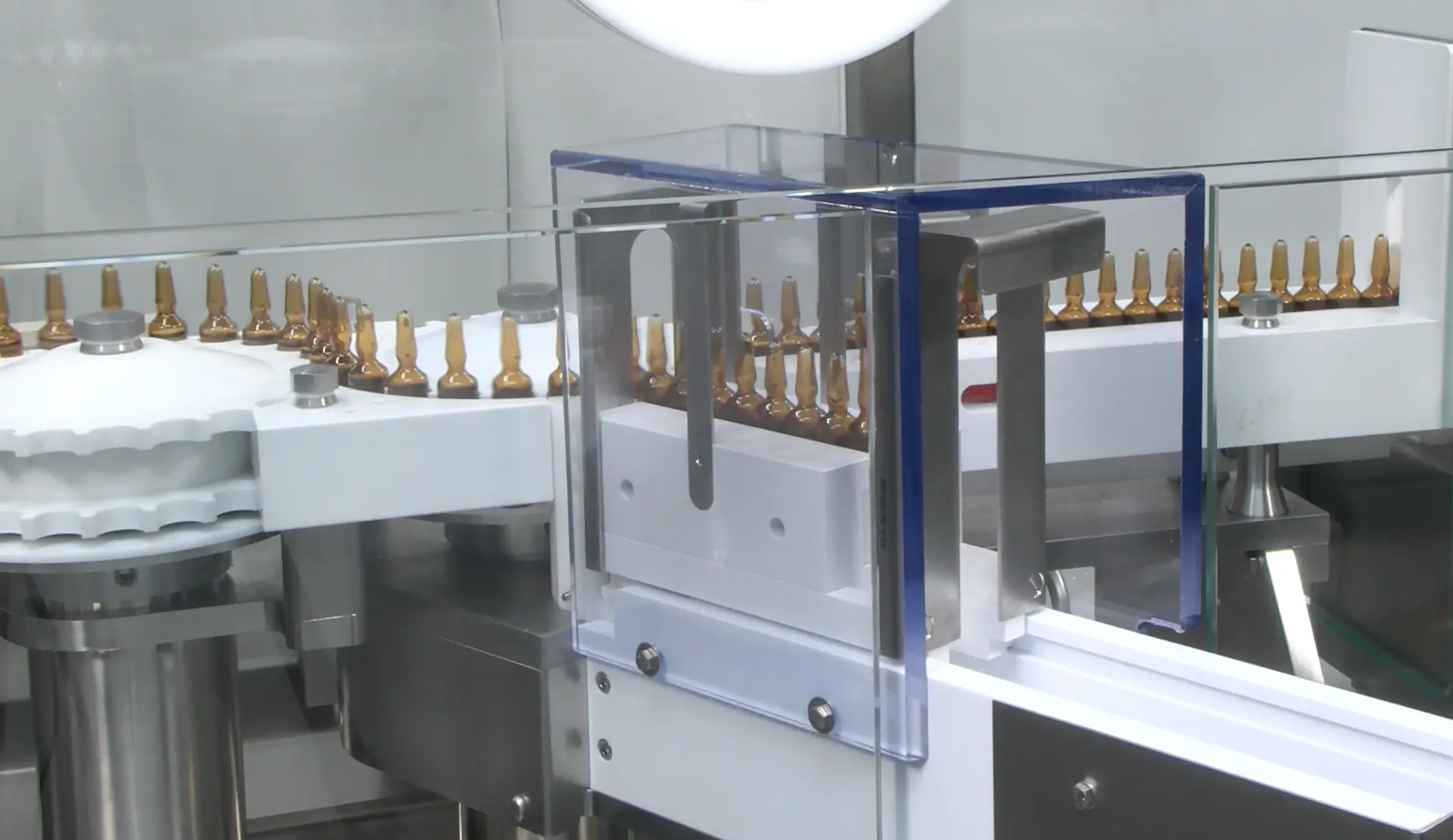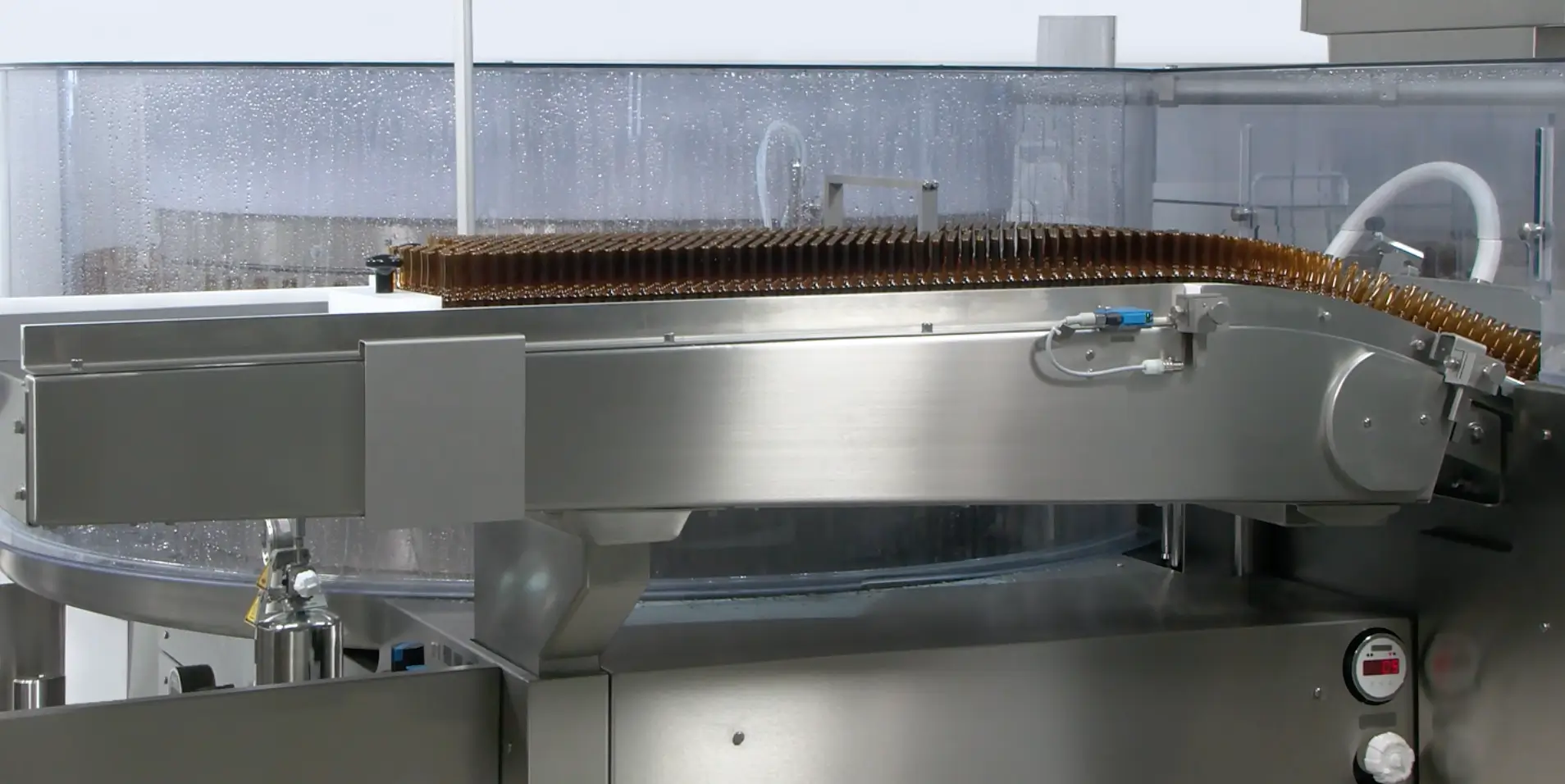


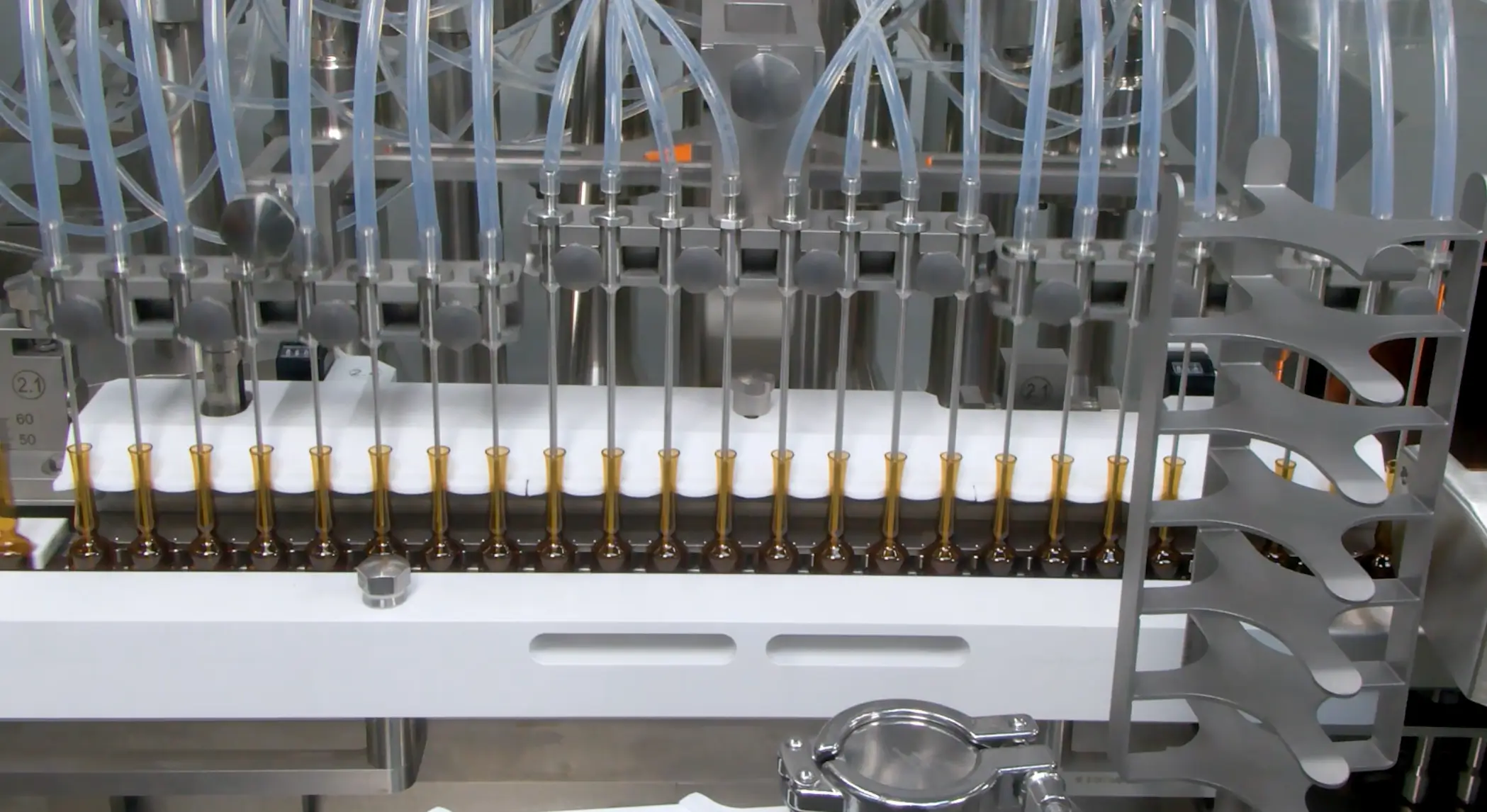
Fill finish refers to the final steps of pharmaceutical manufacturing, in which a fully formulated product is filled under sterile conditions, closed, inspected and packaged. For injections, infusions and eye drops, fill finish is the most critical section, because this is where the sterility of the product is decided. This article explains the individual process steps and shows where the typical risks lie.
Key takeaways
- Fill finish comprises compounding, sterile filtration, filling, closing, visual inspection, labelling and packaging.
- Aseptic filling takes place in grade A in B cleanrooms, usually behind barrier systems.
- Lubeca fill offers fill finish for ampoules, vials and bottles on equipment from Groninger, Bausch + Ströbel and Syntegon.
What does fill finish mean?
The manufacture of a medicinal product is divided into API production, formulation and the fill finish part. While the API is often produced at another site, formulation and filling are frequently carried out together at the contract filler. The decisive step is aseptic processing, in which an already sterile product is filled into the final container without subsequent sterilisation. Alternatively, heat-stable products are terminally sterilised in the final container.
The process steps at a glance
| Step | What happens | Critical point |
|---|---|---|
| 1. Compounding | API and excipients are dissolved in water for injection | Homogeneity, bioburden before filtration |
| 2. Sterile filtration | Filtration through a filter with 0.2 µm pore size | Filter integrity test |
| 3. Preparation of packaging materials | Washing and depyrogenation of vials and ampoules, sterilisation of stoppers | Freedom from endotoxins |
| 4. Filling | Dosing into ampoules, vials or bottles under grade A | Fill accuracy, operator interventions |
| 5. Closing | Sealing of ampoules or placing stoppers and crimp caps | Container tightness |
| 6. Inspection | Visual inspection for particles, leak testing, sampling | Detection of particles and cracks |
| 7. Labelling and packaging | Marking with batch and expiry, folding carton, shipping carton | Prevention of mix-ups |

Where do the risks in fill finish lie?
The greatest risk is the introduction of microorganisms or particles during the open phase between filtration and closure. This is why modern lines work with RABS or isolators that separate personnel from the product. The second risk is leaking containers, for example due to cracks in the glass or poorly seated stoppers. The third risk concerns mix-ups during labelling and packaging. All three points are safeguarded by validation, media fills and in-process controls.
Which containers are used in fill finish?
- Glass ampoules for single doses from 1 to 10 ml
- Vials with stopper and crimp cap for single and multiple doses
- Ready-to-fill vials delivered pre-sterilised
- Bottles for oral and topical solutions
- Eye drop bottles and nasal sprays
Fill finish at Lubeca fill
Lubeca fill was founded in 2019 and operates fill finish lines from Groninger, Bausch + Ströbel and Syntegon in Çorlu near Istanbul. The range includes ampoules from 1 to 10 ml, vials in the bulk line process, ready-to-fill vials, eye and nasal preparations, liquid dosage forms and diagnostics. EU GMP certification is currently in preparation. How the process is simulated is shown in the article on media fills. The requirements for sterile sites are summarised in the article on Annex 1. Details of the lines can be found on the page bulk line processing.
Frequently asked questions about fill finish
What is the difference between aseptic filling and terminal sterilisation?
In aseptic filling the product is sterile before filling and must remain so. In terminal sterilisation the closed container is subsequently sterilised in an autoclave. The latter is safer but only possible for heat-stable products.
How long does a fill finish order take?
Filling a batch takes hours to a few days. Added to this are the sterility test with 14 days of incubation and batch release.
Can a contract filler also take over the formulation?
Yes, many sites offer compounding as well. The client then supplies API and excipients instead of the finished solution.
Are you looking for fill finish capacity for sterile products? Contact us.