


Process validation is the documented evidence that a manufacturing process reproducibly delivers a product of the required quality. In sterile filling it is one of the obligations under EU GMP and a prerequisite for a batch to be released at all. Anyone who hands a product to a contract filler should know the procedure, because validation determines the schedule and cost of the project. This article explains qualification, validation and ongoing monitoring.
Key takeaways
- Before process validation, equipment is qualified in three stages, IQ, OQ and PQ.
- Traditional process validation usually comprises three consecutive batches under routine conditions.
- This is followed by ongoing process verification, which monitors the process throughout its lifecycle.
What is process validation?
Process validation demonstrates that a process works reliably within defined parameters. The basis in the EU is Annex 15 of the EU GMP guide on qualification and validation. It describes three approaches, traditional validation with validation batches, continuous process verification with extensive in-line monitoring, and a hybrid approach. For the contract filling of sterile liquids, the traditional route with three batches is still common.
Qualification: IQ, OQ and PQ explained
| Stage | Meaning | What is checked |
|---|---|---|
| DQ | Design qualification | Does the planned equipment meet the requirements and GMP specifications? |
| IQ | Installation qualification | Is the equipment installed as specified, including documentation, calibration and utilities? |
| OQ | Operational qualification | Does the equipment work across the entire operating range, including alarms and limits? |
| PQ | Performance qualification | Does the equipment deliver the required result with product or placebo under routine conditions? |
Only when all stages are complete may process validation begin. At a contract filler, equipment qualification is part of site qualification and is already in place when a new product is taken on.
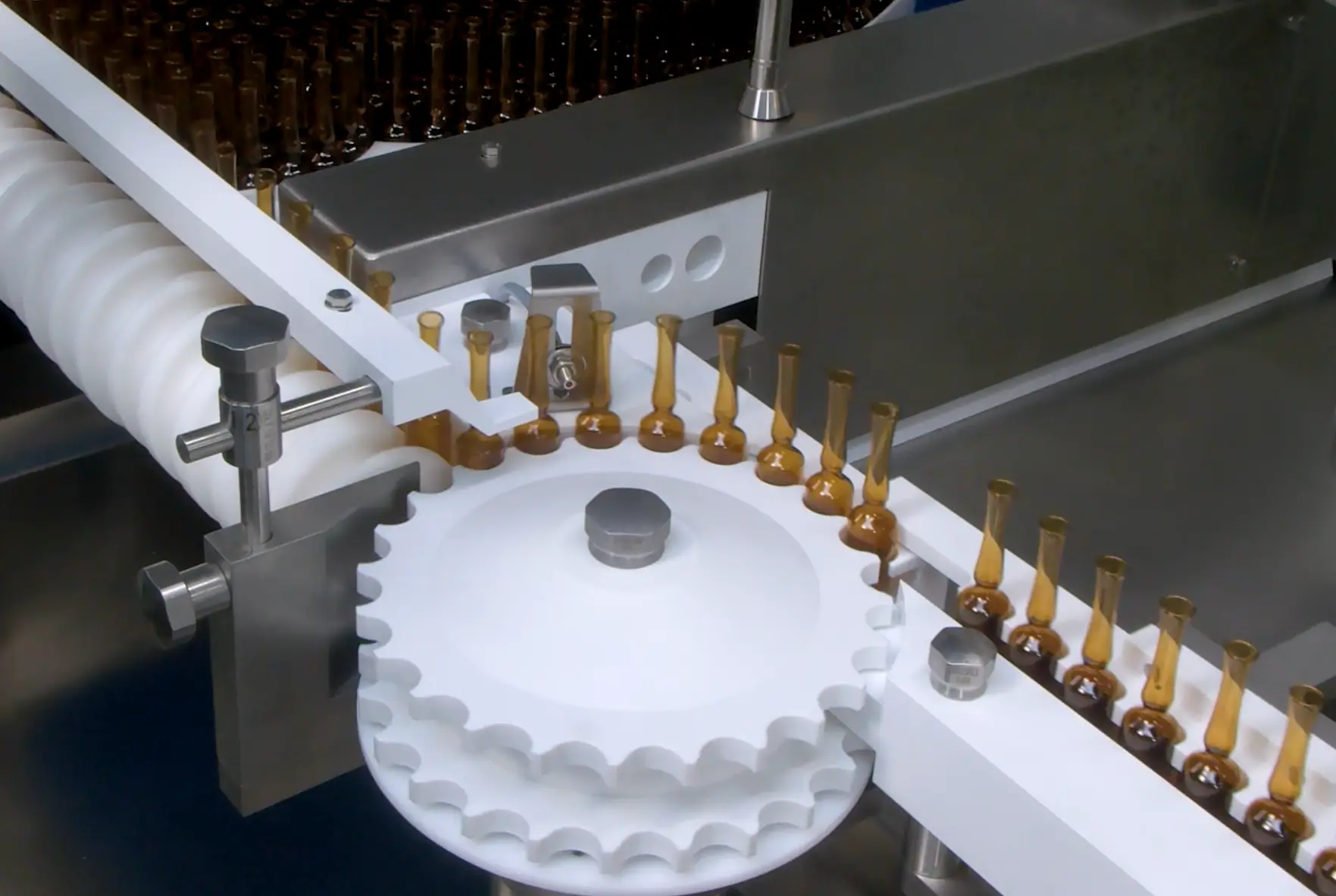
How does process validation work?
1. Validation plan
The plan defines critical process parameters, critical quality attributes, sampling, test methods and acceptance criteria. It is approved jointly by the client and the filler.
2. Validation batches
Usually three consecutive batches of commercial size are manufactured. Sampling is more intensive than in routine production, for example fill volume, closure force, particles and sterility at the beginning, middle and end of filling.
3. Validation report
The report evaluates all results against the acceptance criteria and approves the process. Deviations must be investigated and assessed.
4. Ongoing process verification
After approval, the site continues to monitor the process, for example through trend analyses of fill volumes and environmental data. This allows changes to be detected early.
What applies to changes?
Every change to equipment, packaging material, formulation or batch size goes through change control. There it is assessed whether revalidation is necessary. A new vial format, for example, often requires a new PQ and at least one validation batch, whereas a change of stopper supplier may only require an assessment with data.
What the client has to contribute
- Critical quality attributes of the product and their limits
- Validated analytical methods or their transfer
- API and excipients for the validation batches
- Approval of validation plan and report
- Variation submission to the authority, where required
Process validation at Lubeca fill
Lubeca fill was founded in 2019 and operates filling lines from Groninger, Bausch + Ströbel and Syntegon in Çorlu near Istanbul. The equipment is qualified according to Annex 15, and EU GMP certification is currently in preparation. For new products we draw up the validation plan together with you and run the validation batches on the future routine line. How a product is taken on is described in the article on tech transfer. The simulation of the aseptic process is explained in the article on media fills.
Frequently asked questions about process validation
How long does process validation take?
With planning, three batches, analytics and report usually three to six months. Sterility tests and stability data can extend the duration.
Does it always have to be three batches?
Three batches are common, but Annex 15 does not fix the number. The number must be justified on the basis of risk.
May validation batches be sold?
Yes, if they meet all specifications, validation was successful and the Qualified Person releases them.
Are you planning the validation of a product on a new line? Contact us.