

Depyrogenation is the removal or destruction of pyrogens, above all bacterial endotoxins, on vials, ampoules and other packaging materials before sterile filling. Endotoxins are components of dead bacteria that trigger fever in the body and survive normal sterilisation. It is therefore not enough to sterilise containers, they must also be free of endotoxins. This article explains the methods, the evidence and the place of depyrogenation in the fill finish process.
Key takeaways
- Glass containers are depyrogenated in a dry heat tunnel at above 250 degrees Celsius, stoppers by rinsing with water for injection.
- Evidence is considered provided when an endotoxin challenge is reduced by at least three orders of magnitude.
- Ready-to-fill vials are delivered already depyrogenated, which eliminates this process step at the filler.
What are pyrogens and endotoxins?
Pyrogens are fever-inducing substances. The most important group are endotoxins, lipopolysaccharides from the cell wall of gram-negative bacteria. They arise wherever bacteria have grown and died, for example in water or on stored packaging materials. Endotoxins are heat-stable, and an autoclave at 121 degrees Celsius does not destroy them. Only temperatures well above 200 degrees Celsius or mechanical removal provide a remedy. The basics are described in the article on depyrogenation.
Which depyrogenation methods exist?
| Method | Principle | Use |
|---|---|---|
| Dry heat in a tunnel | Glass passes through a heating zone at a minimum of 250 degrees Celsius, endotoxins are destroyed | Glass vials, ampoules and bottles directly before filling |
| Dry heat in a steriliser | Batch treatment at high temperature for a defined time | Glassware, stainless steel parts, small batches |
| Rinsing with water for injection | Endotoxins are rinsed off mechanically, no destruction | Stoppers, plastic parts, pre-treatment of glass |
| Chemical treatment | Sodium hydroxide or hydrogen peroxide destroy endotoxins on surfaces | Equipment parts, chromatography columns |
| Ultrafiltration | Membrane retains endotoxins from liquids | Water treatment, buffer solutions |
How does depyrogenation work in the fill finish process?
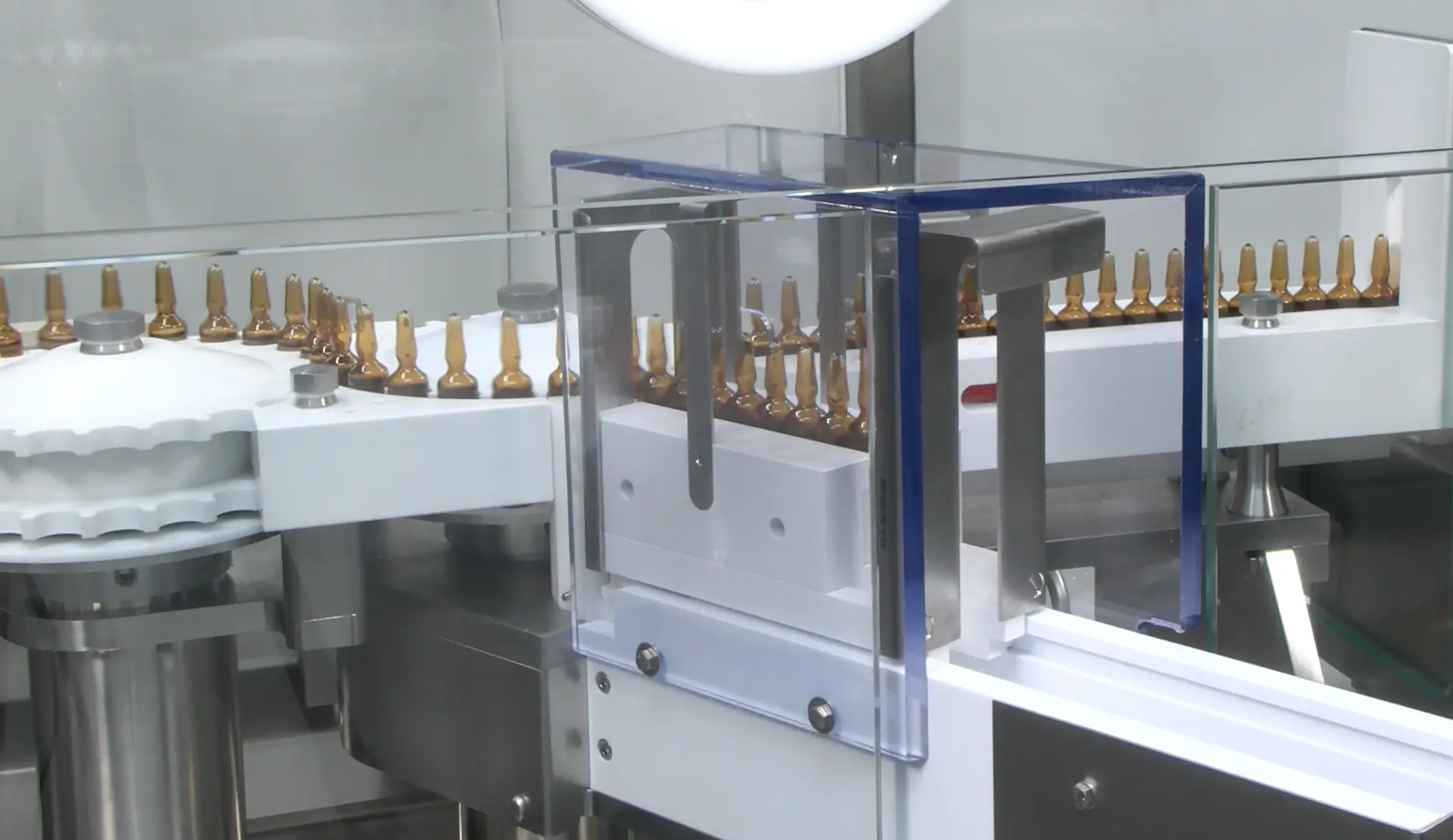
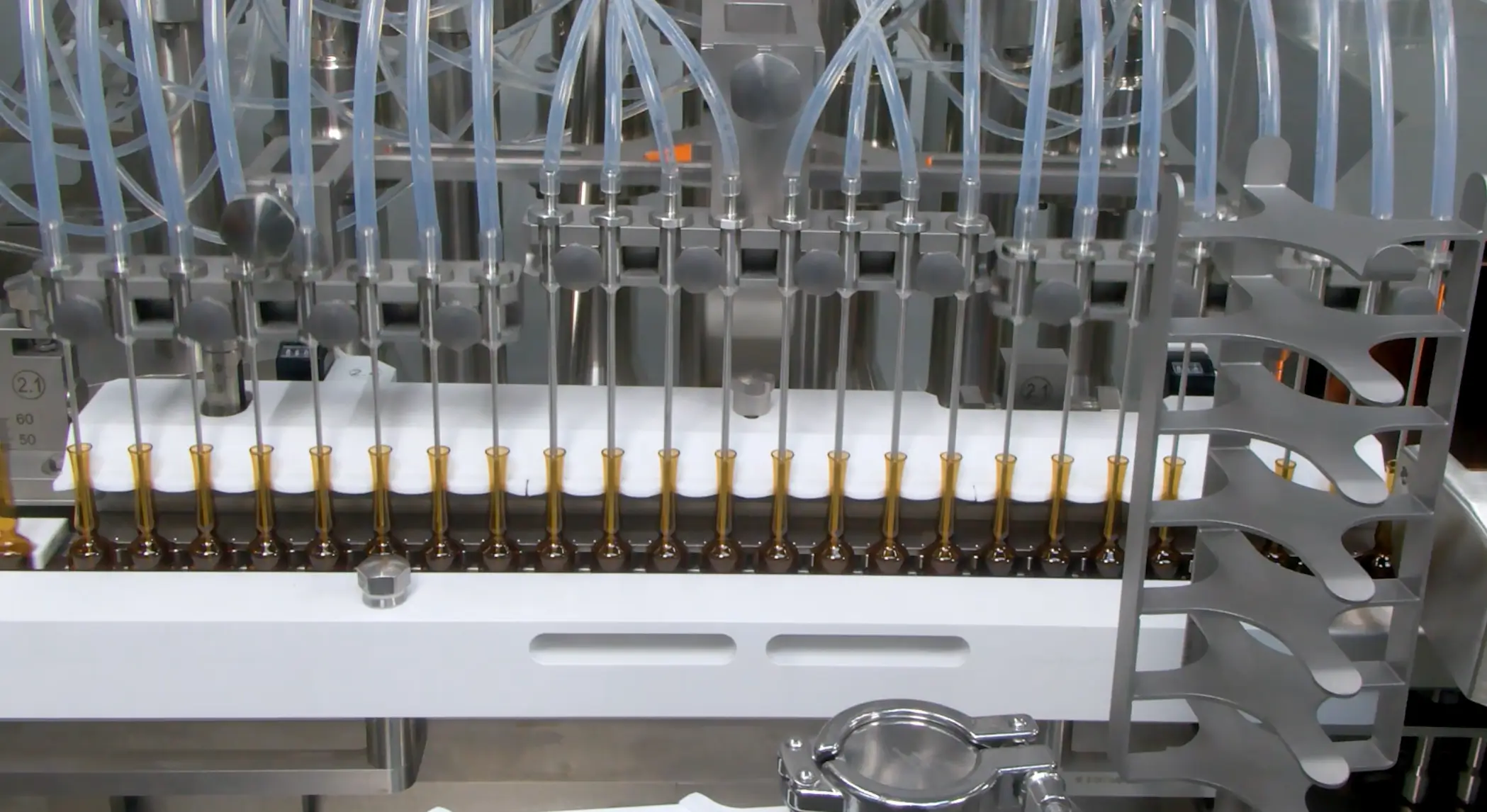
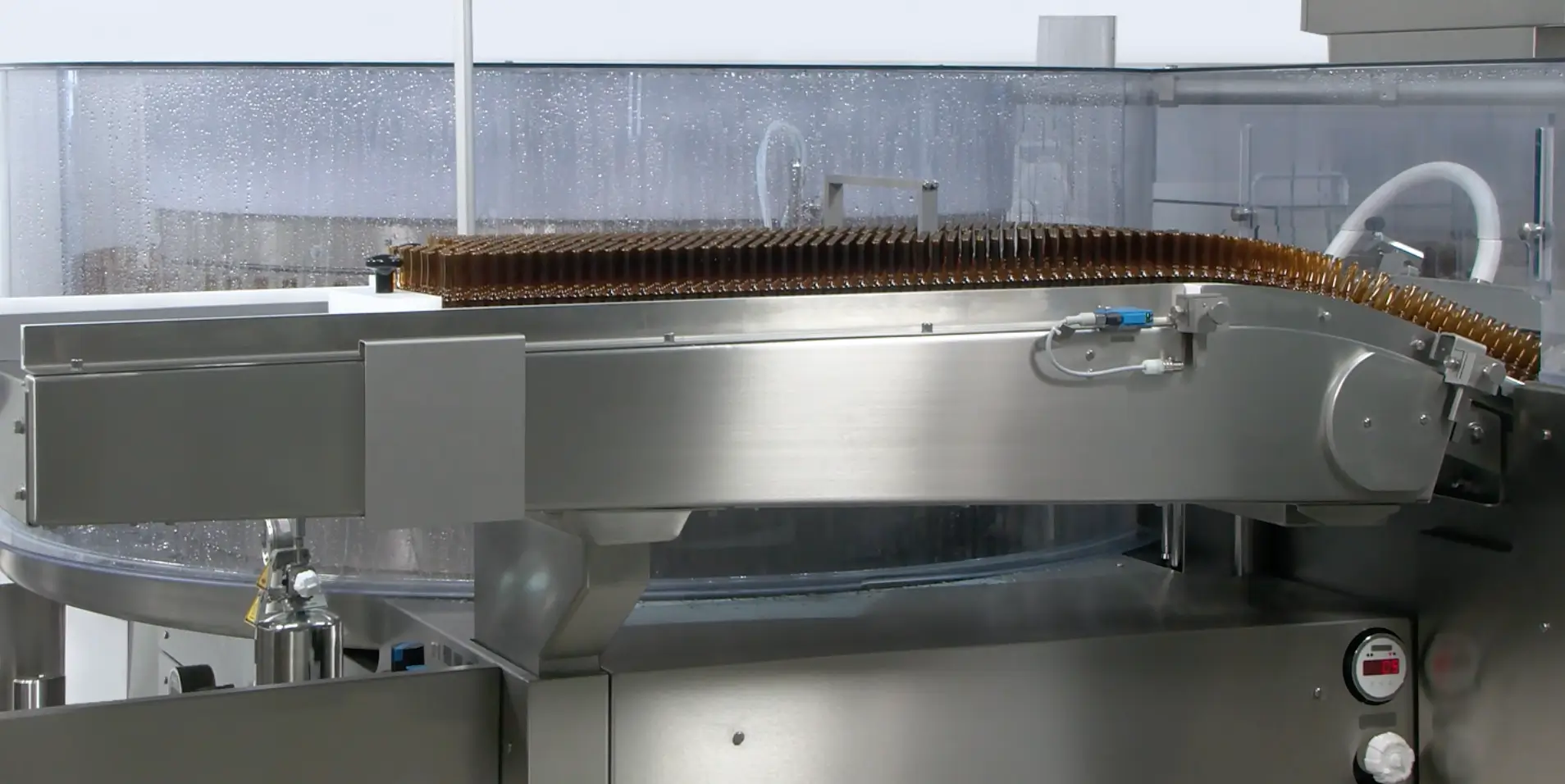
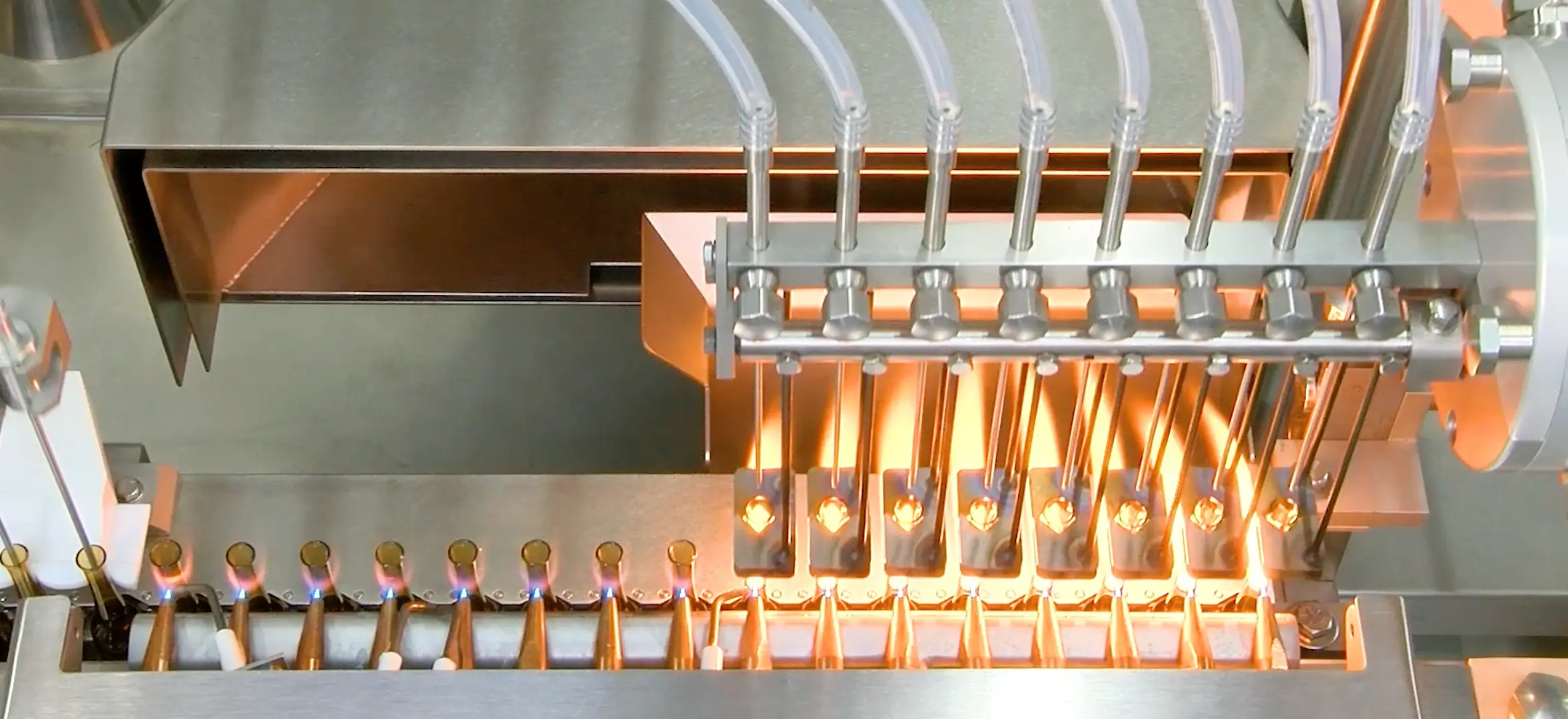
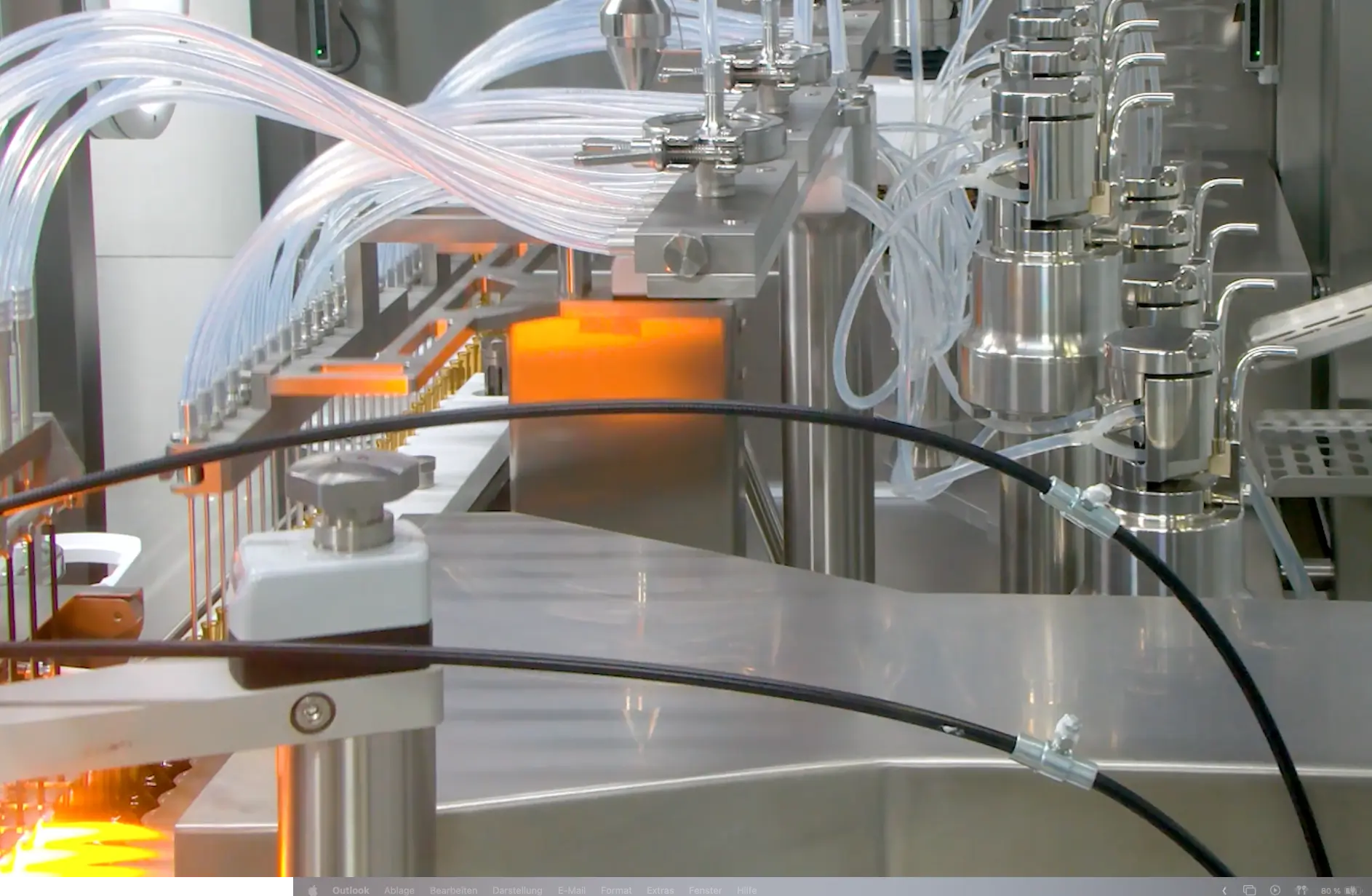
Glass vials and ampoules are first rinsed in a washing machine with water for injection. They then pass through the depyrogenation tunnel, which consists of a preheating zone, a heating zone and a cooling zone. The heating zone operates at above 250 degrees Celsius, and the cooling zone brings the containers to room temperature under sterile conditions. The grade A cleanroom in which filling begins is located directly at the tunnel exit. Stoppers are washed separately, siliconised and sterilised in an autoclave, because rubber cannot withstand the tunnel temperatures.
How is depyrogenation demonstrated?
Validation uses endotoxin indicators. These are containers that have been deliberately loaded with a known amount of endotoxin, usually at least 1,000 endotoxin units. After the run, the residual content is measured. The process is considered effective if the challenge is reduced by at least three orders of magnitude, meaning by 99.9 percent. In addition, temperature distribution in the tunnel, belt speed and worst-case positions are documented. Requalification takes place at fixed intervals and after changes.
Ready-to-fill as an alternative
Pre-sterilised and depyrogenated packaging materials, known as ready-to-fill vials, are prepared by the packaging manufacturer and delivered packed in nests. The filler opens the packaging in the cleanroom and fills directly. Washing machine and tunnel are eliminated, which saves set-up time and is economical for small batches. Responsibility for depyrogenation then lies with the packaging supplier, who must be qualified accordingly.
Depyrogenation at Lubeca fill
Lubeca fill was founded in 2019 and fills ampoules from 1 to 10 ml and vials on equipment from Groninger, Bausch + Ströbel and Syntegon in Çorlu near Istanbul. In addition to the classic bulk line with washing and depyrogenation, Lubeca fill also offers the processing of ready-to-fill vials. EU GMP certification is currently in preparation. The entire process is shown in the article on fill finish, and the requirements for water in the article on water for injection. Details can be found on the page ready-to-fill contract filling.
Frequently asked questions about depyrogenation
Why is sterilisation not enough?
Sterilisation kills microorganisms but does not destroy their endotoxins. A sterile but endotoxin-contaminated vial would trigger fever in the patient.
How long does depyrogenation in the tunnel take?
Depending on temperature and validation, the dwell time in the heating zone is usually between a few minutes and half an hour.
How is endotoxin tested in the finished product?
With the LAL test or recombinant alternatives. The limit depends on the dose and route of administration of the medicinal product.
Would you like to know which packaging materials Lubeca fill processes? Contact us.