


The contract filling of eye drops is one of the particularly sensitive areas of pharmaceutical manufacturing. Ophthalmic products are applied directly to the eye and must therefore meet high requirements for sterility, tolerability, dosing accuracy and product safety. Even small deviations in the process can affect the quality of the final product. Simple filling is therefore not enough. What is decisive are controlled conditions, validated procedures and a quality system that meets pharmaceutical requirements.
For pharmaceutical companies, manufacturers of ophthalmic products and international clients, selecting a suitable partner is therefore a strategic step. A professional contract filler must not only provide suitable equipment. They must master sterile processes, understand packaging requirements, control risks and document the entire manufacturing process in a traceable manner.
Table of contents
ToggleWhat Does Contract Filling of Eye Drops Mean?
Contract filling of eye drops refers to the external manufacturing or filling of liquid ophthalmic products into suitable primary packaging. This includes, for example, dropper bottles, single-dose containers or other packaging systems intended for application to the eye. The products may be sterile solutions, suspensions or special formulations for ophthalmic applications.
The process involves considerably more than simply filling a container. Before the actual filling, product requirements, packaging, fill volume, sterility concept, closure system, storage conditions and regulatory target markets must be assessed. Only once these points have been properly clarified can a stable and safe filling process be planned.
More information on suitable services can be found on the page for ophthalmic products.
Why Eye Drops Place Special Demands
Eye drops differ significantly from many other liquid products. The eye is a sensitive organ, which is why formulation, purity and safety of use are particularly important. Products must be microbiologically safe and must not contain any unwanted particles or contaminants. In addition, pH value, osmolarity, active ingredient concentration and excipients must be suitable for the intended application.
Dosing also plays an important role. A dropper bottle must enable a reproducible drop size so that the user can use the product reliably. At the same time, the packaging must protect the product during storage and transport. This is why product development, packaging selection and contract filling are closely linked in the case of eye drops.
Sterility as the Central Basis of Ophthalmic Products
Sterility is a central requirement for many ophthalmic products. Since eye drops are applied directly to the eye, the risk of microbiological contamination must be consistently controlled. This concerns not only the filling itself, but also product preparation, packaging feeding, closure, environment, personnel behaviour and downstream quality controls.
The European EU GMP Guide in EudraLex Volume 4 forms an important basis for pharmaceutical manufacturing. Also particularly relevant is EU GMP Annex 1 on the manufacture of sterile medicinal products, because it describes requirements for sterile processes, contamination control and aseptic processing.
For companies with an international perspective, the FDA guidance on sterile drug products produced by aseptic processing may also be relevant. It provides important orientation for aseptic manufacturing processes and cGMP requirements.
Contamination Control in Eye Drop Filling
In the contract filling of eye drops, contamination control is the central focus. This is not only about microorganisms. Particles, residues, chemical contaminants or unsuitable material contact can also affect product quality. A professional contamination control strategy therefore considers the entire process and not just individual technical areas.
This includes clear specifications for material flows, personnel movements, cleaning, disinfection, environmental monitoring, equipment condition and interventions in the process. All open process steps in which product or packaging may be exposed to the environment are particularly critical. These phases must be safeguarded technically and organisationally.
A common mistake is the assumption that a cleanroom alone is sufficient. That is not the case. A cleanroom creates controlled conditions, but safe ophthalmic filling only comes about through validated processes, trained personnel, suitable packaging and consistent quality controls.
Aseptic Processes and Validated Procedures
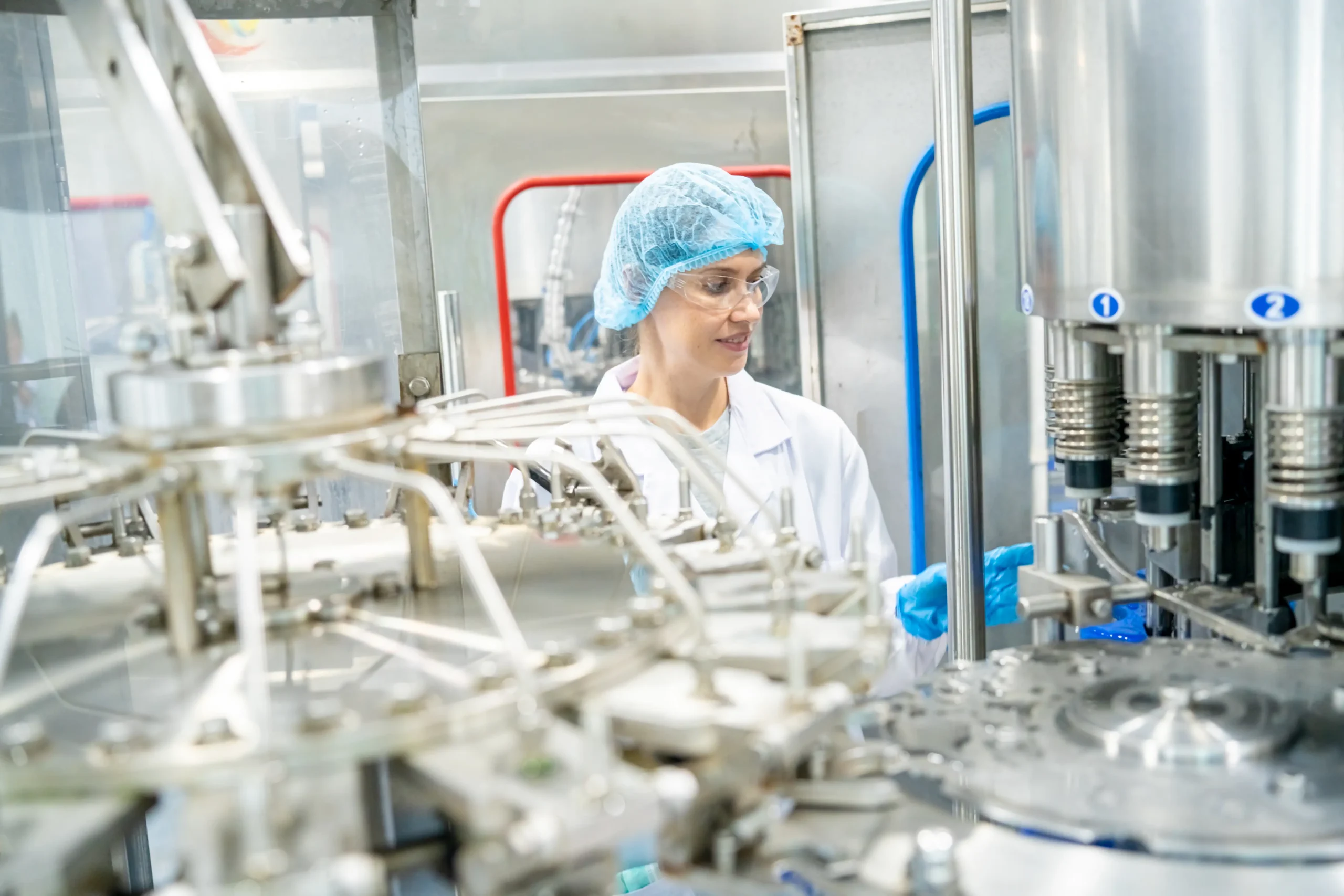
Many eye drops are filled under aseptic conditions. The entire process must be designed so that the product remains sterile during filling. This concerns product feeding, dosing, containers, closure components, machine environment and operator interventions. Each of these points can become a risk if it is not properly controlled.
Validation is therefore a central component of the contract filling of eye drops. Equipment, rooms, cleaning processes, sterilisation methods, filling parameters and test methods must be suitable and documented in a traceable manner. This is the only way to demonstrate that the process works reliably under defined conditions.
Media fills also play an important role in aseptic processes. They simulate the filling process under practical conditions and show whether microbiological process safety is ensured. Such evidence is important for clients because it makes the robustness of the filling process easier to assess.
Packaging for Ophthalmic Products
Choosing the right packaging is particularly important for eye drops. Dropper bottles, single-dose containers or other ophthalmic systems must suit the product and the application. This involves material compatibility, dosing behaviour, tightness, sterilisability, protection against contamination and user-friendliness.
Packaging must not negatively affect the formulation. At the same time, it must protect the product over its intended shelf life. Preservative-free products give rise to additional requirements, because the packaging often has to take on a special barrier function. Packaging selection should therefore be integrated into project planning at an early stage.
If product, packaging and filling process do not fit together, technical or regulatory problems arise later. These can include uneven drop sizes, interactions with the material, leaks, stability problems or difficulties in maintaining sterility.
Dosing Accuracy and Drop Formation
With eye drops, dosing accuracy is not just a technical figure. It directly affects the use of the product. The packaging must enable uniform drop formation, while the filling must reliably maintain a defined fill volume. Precision is decisive, especially with small fill quantities or high-value formulations.
Drop size depends on several factors. These include viscosity, surface tension, bottle material, dropper insert, opening geometry and handling. Filling must therefore always be considered in connection with the subsequent application. A technically correct fill is of little use if the dosing system does not work reliably in everyday use.
Quality Controls During and After Filling
Professional contract filling of eye drops requires clear testing and control steps. During the process, in-process controls may cover, for example, fill volume, closure, visible particles or packaging quality. Depending on the product, downstream testing may include further microbiological, physical or chemical controls.
It is important that tests are not considered in isolation. They must be embedded in a functioning quality system. Deviations must be assessed, documented and addressed with suitable measures. This creates not only safety for the respective batch, but also a basis for long-term process stability.
Documentation and Traceability
In pharmaceutical contract filling, documentation is a mandatory part of the process. Every batch must be manufactured, tested and assessed in a traceable manner. This is particularly important for eye drops, because sterile ophthalmic products are regulatorily sensitive and must meet high requirements for quality and product safety.
Documentation includes, among other things, manufacturing records, test records, material certificates, cleaning records, monitoring data, release documents and deviation reports. These documents support audits, communication with authorities and internal quality assessments. At the same time, they help to monitor and improve processes over the long term.
Traceability is particularly important for internationally active companies. Different target markets may have different expectations regarding evidence, responsibilities and quality documents. An experienced contract filler should be familiar with these requirements and take them into account at an early stage.
Typical Challenges in the Contract Filling of Eye Drops
At first glance, ophthalmic products appear standardised. In practice, however, projects differ greatly. Some formulations are sensitive to temperature, light or oxygen. Others place special demands on viscosity, filtration, drop formation or packaging compatibility. Each project must therefore be assessed individually.
- Sterile or aseptic processing of sensitive liquids
- Exact fill quantities for small container sizes
- Suitable dropper bottles or special ophthalmic packaging
- Control of particles and microbiological risks
- Validated cleaning, sterilisation and process management
- Traceable documentation for audits and international markets
These challenges should not only become visible during production. A good partner checks critical points as early as the project phase. This reduces risks, avoids loss of time and makes later changes easier to control.
Regulatory Requirements in an International Environment
Many ophthalmic products are not developed for a single market only. Pharmaceutical companies often plan international approvals, supply chains and distribution structures. The contract filling of eye drops must therefore be properly prepared from a regulatory perspective. EU GMP forms a central basis for Europe, while other target markets may impose additional requirements.
For clients, this means: the contract filler should not only be technically suitable. They must think along regulatory lines and understand which documents, process evidence and quality agreements are required for international projects. This applies in particular to sterile products, aseptic processes and sensitive primary packaging.
What Pharmaceutical Companies Should Look for in a Contract Filler
The selection of a partner for the contract filling of eye drops should be carried out in a structured manner. What matters is not only whether a provider can fill liquids into dropper bottles. More important is whether they master sterile ophthalmic processes safely, reproducibly and with full documentation.
- Experience with ophthalmic products and sterile liquids
- Suitable process environment for aseptic or sterile filling
- Understanding of packaging, dropper systems and dosing requirements
- Validated procedures and qualified equipment
- Structured quality assurance and clear documentation
- Open technical assessment before project start
A reputable partner will address critical points openly. If a formulation, packaging or regulatory target market has special requirements, this must be clarified at an early stage. A quick commitment without technical review is not an advantage with sterile eye drops, but a risk.
Project Planning for Safe Ophthalmic Filling
Successful contract filling of eye drops begins long before the first production run. Clients should clarify at an early stage which product type, packaging, fill volume and target market are relevant. Questions concerning sterility, shelf life, testing and batch documentation also belong in the early project phase.
The more precisely these points are defined, the better the process can be planned. Especially with sterile products, sound preparation reduces later corrections, technical adjustments and regulatory uncertainties. In addition, the contract filler can assess early on which process environment, equipment configuration and testing strategy make sense.
Lubecafill supports companies with demanding projects involving sterile ophthalmic products, eye drops, injectables and other pharmaceutical dosage forms. Further relevant information can also be found in the section on the contract filling of ampoules and injectables.
Contract Filling of Eye Drops as a Quality-Critical Process
The contract filling of eye drops is a demanding pharmaceutical process in which sterility, precision, packaging expertise and regulatory documentation come together. For ophthalmic products, this combination is particularly important because application to the eye places high demands on safety and tolerability.
Pharmaceutical companies should therefore choose a partner at an early stage who does not simply fill, but understands sterile processes, assesses risks and documents quality in a traceable manner. This creates a stable basis for safe eye drops, international requirements and reliable pharmaceutical projects.
Are You Planning the Contract Filling of Eye Drops?
Then get in touch with Lubecafill and discuss your requirements for sterile ophthalmic products, suitable packaging and safe pharmaceutical filling.